
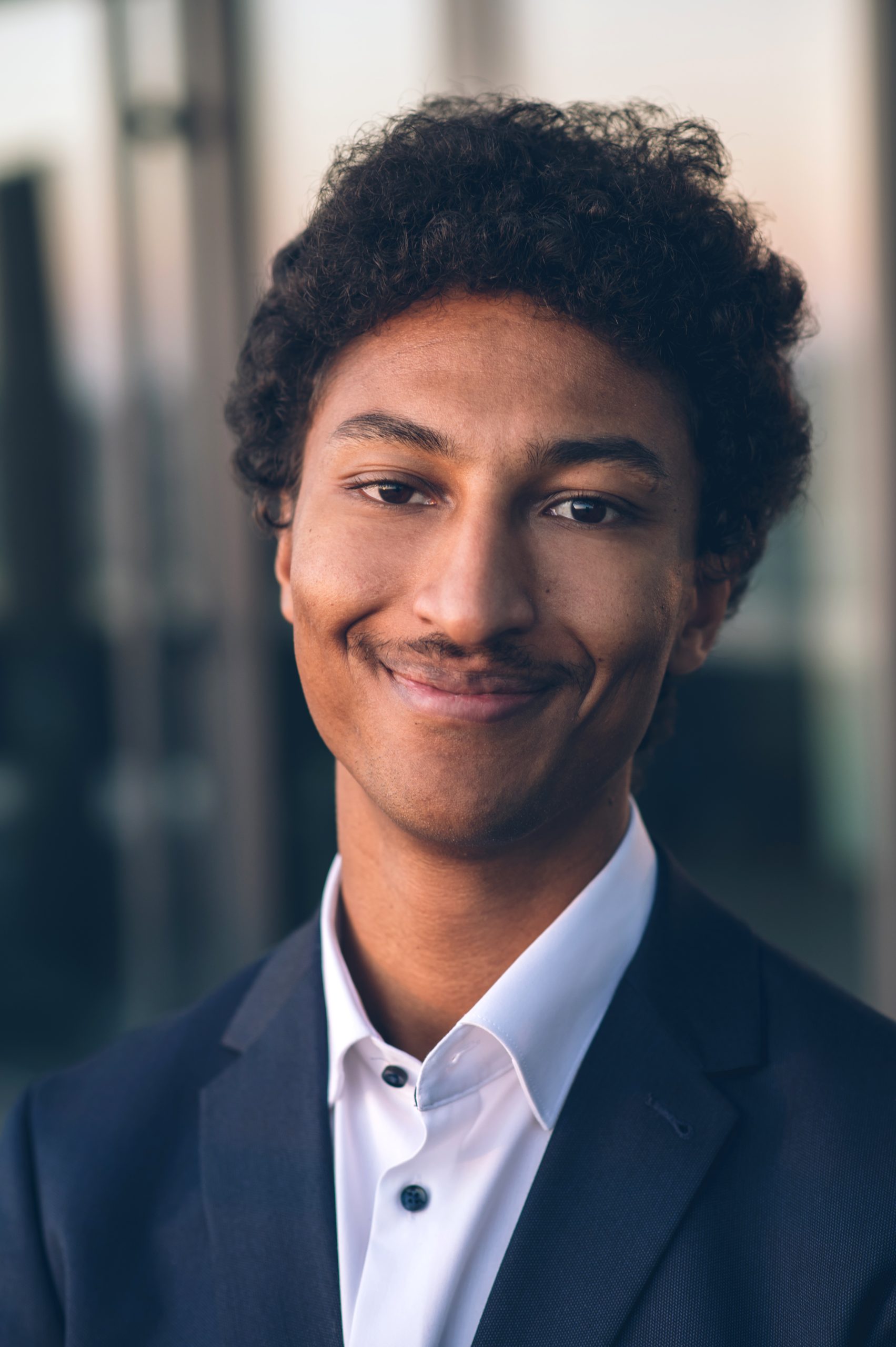
Team

Preference Elicitation
User Modeling
Multi-Domain Recommender Systems
E-Commerce
Generative AI
Ahmadou Wagne
PreDoc Researcher
Ahmadou Wagne is a PhD student and project assistant at TU Wien, Austria. He holds a Bachelor’s degree in Information Science and General and Comparative Linguistics from the University of Regensburg, Germany, and a Master’s degree in Data Science from TU Wien.
His research focuses on preference elicitation in multi-domain recommender systems with a conversational approach, especially in E-Commerce. This research is dedicated to better understanding a user’s preferences and facilitating their decision-making process. Beyond this, his academic interests extend to the fields of natural-language-processing and computational social science.
Teaching
- 194.050 Social Network Analysis WS2023, WS2024
- 194.035 Recommender Systems SS2024, SS2025
- 194.164 Advanced Topics in Recommender Systems and Generative AI SS2024, SS2025
Activities & Talks
- Exhibition stand at the AI Festival 2025
- Tutorial on “Recent Advances in Generative Conversational Recommender Systems” at RecSys 2025
- Recording on YouTube
- Recording & Slides
- Speaker at the CAIML Symposium 2025
- Organizer of the ACM Summer School on Recommender Systems 2025
- Co-Chair of the LLM4Good Workshop co-located with ACM UMAP 2025
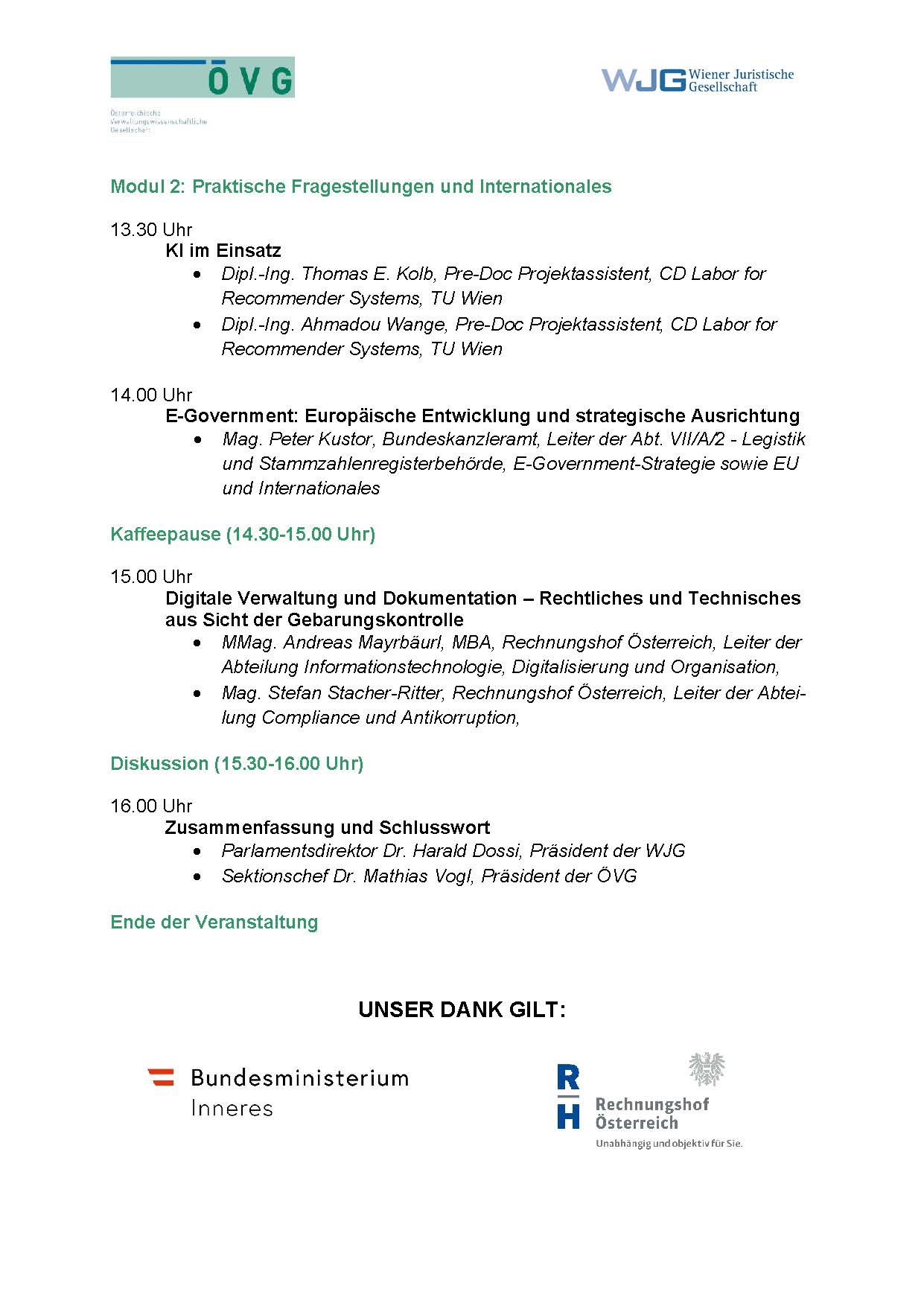
- Speaker at ÖVG Herbsttagung 2024
- Speaker at ÖAW AI Winter School 2023: Populism Detection
- Speaker at 2nd ACM Digital Humanism Summer School: Hands-On Session Chat-GPT
- Speaker at Workshop: Österreichisches Treffen zu Sentimentinferenz (ÖTSI) Österreichische Linguistik-Tagung 2023: Populism Detection
- Participant at RecSys Summer School 2023
Other
- Member of the iCAIML Doctoral College
- Reviewer:
Publications
2026
Sergaš, Uroš; Wagne, Ahmadou; Kolb, Thomas Elmar; Neidhardt, Julia; Ferwerda, Bruce; Tkalcic, Marko
Prompt to Press: Evaluating Human Perception of AI Involvement in News Writing Across Prompt Specificity Proceedings Article
In: Companion Proceedings of the 31st International Conference on Intelligent User Interfaces, pp. 89–92, Association for Computing Machinery, New York, NY, USA, 2026, ISBN: 9798400719851.
@inproceedings{10.1145/3742414.3795097,
title = {Prompt to Press: Evaluating Human Perception of AI Involvement in News Writing Across Prompt Specificity},
author = {Uroš Sergaš and Ahmadou Wagne and Thomas Elmar Kolb and Julia Neidhardt and Bruce Ferwerda and Marko Tkalcic},
url = {https://doi.org/10.1145/3742414.3795097},
doi = {10.1145/3742414.3795097},
isbn = {9798400719851},
year = {2026},
date = {2026-01-01},
booktitle = {Companion Proceedings of the 31st International Conference on Intelligent User Interfaces},
pages = {89–92},
publisher = {Association for Computing Machinery},
address = {New York, NY, USA},
series = {IUI '26 Companion},
abstract = {Large language models (LLMs) are becoming a common feature in content creation tools, prompting important questions about how design choices influence user trust and engagement in AI-assisted journalism. Beyond output quality, factors such as prompt specificity, model choice, and authorship disclosure are themselves interaction design parameters that influence how users interpret and evaluate AI contributions. Yet, little is known about how these design decisions affect reader perceptions in journalistic contexts. To address this gap, we conducted an experiment with 150 participants who evaluated news articles on the sensitive topic of assisted suicide. The articles systematically varied in authorship (human-written, AI-edited, or AI-generated), stance (pro- or anti-legalization), and prompt specificity (vague, moderate, or highly detailed). Participants rated each article on engagement, subjectivity, and perceived AI involvement, and also provided open-ended justifications for their authorship judgments. Our findings show that prompt specificity and model choice significantly influence perceptions of authorship, underscoring how technical design decisions in AI tools can shape public trust in journalism.},
keywords = {},
pubstate = {published},
tppubtype = {inproceedings}
}
Wagne, Ahmadou; Kolb, Thomas Elmar; Banerjee, Ashmi; Neidhardt, Julia; Deldjoo, Yashar
LLM4Good: The 2nd Workshop on Sustainable and Trustworthy Large Language Models for Personalization Proceedings Article
In: Proceedings of the 34th ACM Conference on User Modeling, Adaptation and Personalization, pp. 684–687, Association for Computing Machinery, New York, NY, USA, 2026, ISBN: 9798400723117.
@inproceedings{10.1145/3774935.3802536,
title = {LLM4Good: The 2nd Workshop on Sustainable and Trustworthy Large Language Models for Personalization},
author = {Ahmadou Wagne and Thomas Elmar Kolb and Ashmi Banerjee and Julia Neidhardt and Yashar Deldjoo},
url = {https://doi.org/10.1145/3774935.3802536},
doi = {10.1145/3774935.3802536},
isbn = {9798400723117},
year = {2026},
date = {2026-01-01},
booktitle = {Proceedings of the 34th ACM Conference on User Modeling, Adaptation and Personalization},
pages = {684–687},
publisher = {Association for Computing Machinery},
address = {New York, NY, USA},
series = {UMAP '26},
abstract = {Large Language Models (LLMs) are transforming personalized services by enabling adaptive, context-aware recommendations and interactions. However, deploying these models at scale raises significant concerns about environmental impact, fairness, privacy, and trustworthiness, including high energy consumption, biased outputs, privacy breaches, and hallucinations. The LLM4Good workshop was already hosted at UMAP’251 and is a half-day workshop that addresses these challenges by fostering dialogue on sustainable and ethical approaches to LLM-based personalization. Participants will explore energy-efficient techniques, bias mitigation, privacy-preserving methods, and responsible deployment strategies. The workshop aligns with Sustainable Development Goals and Digital Humanism principles. It aims to guide the development of trustworthy, human-centric LLM systems that positively impact education, healthcare, and other domains.},
keywords = {},
pubstate = {published},
tppubtype = {inproceedings}
}
2025
Wagne, Ahmadou; Kolb, Thomas Elmar; Banerjee, Ashmi; Nazary, Fatemeh; Neidhardt, Julia; Deldjoo, Yashar
Conversational Recommender Systems Using Generative Models (Gen-CRS): A Literature Review Miscellaneous
2025, (Preprint, CC BY 4.0 license).
@misc{wagne2025gencrs,
title = {Conversational Recommender Systems Using Generative Models (Gen-CRS): A Literature Review},
author = {Ahmadou Wagne and Thomas Elmar Kolb and Ashmi Banerjee and Fatemeh Nazary and Julia Neidhardt and Yashar Deldjoo},
url = {https://doi.org/10.13140/RG.2.2.23233.62564},
doi = {10.13140/RG.2.2.23233.62564},
year = {2025},
date = {2025-11-01},
urldate = {2025-11-01},
note = {Preprint, CC BY 4.0 license},
keywords = {},
pubstate = {published},
tppubtype = {misc}
}
Wagne, Ahmadou; Foll, Elen Le; Frantz, Florentine; Lasser, Jana
Giving the outrage a name – how researchers are challenging employment conditions under the hashtags #IchBinHanna and #IchBinReyhan Journal Article
In: Information, Communication & Society, pp. 1-27, 2025.
@article{Wagne_2024,
title = {Giving the outrage a name – how researchers are challenging employment conditions under the hashtags #IchBinHanna and #IchBinReyhan},
author = {Ahmadou Wagne and Elen Le Foll and Florentine Frantz and Jana Lasser},
editor = {Dan Mercea},
doi = {https://doi.org/10.1080/1369118X.2025.2452273},
year = {2025},
date = {2025-01-20},
urldate = {2025-01-20},
journal = {Information, Communication & Society},
pages = {1-27},
abstract = {Outraged by the release of a ministerial video in which short-term employment contracts in German academia were lauded through the embodiment of fictitious doctoral researcher Hanna, thousands of researchers rallied behind the hashtags #IchBinHanna & #IchBinReyhan to vent their frustrations about precarious academic employment in Germany. The emerging connective action attracted a comparatively large number of researchers in a short period of time, stayed active for over two years, elicited reactions from policymakers and the media, and influenced current legislative developments in Germany. We analyse the discourse of over 45,000 tweets related to the movement from its onset in June 2021 to March 2023. Using a mixed-methods approach that combines machine-learning, corpus-linguistic, and qualitative analysis methods, we aim to distil the factors that led to the movement’s considerable success. The fast growth of the movement was likely driven by the use of an easy-to-personalise action frame and the large variety of discussion topics, facilitating the involvement of different groups of academics across career levels and employment conditions. Our analysis of the linguistic characteristics of the discourse reveals largely positive, constructive, and active exchanges, in which many of the most salient keywords are lexical verbs. Our analyses offer an explanation for the continued involvement of many activists and the successful translation of solutions developed by the movement to news reports and proposed law amendments, despite an absence of coordination by any formal organisation.},
keywords = {},
pubstate = {published},
tppubtype = {article}
}
Kolb, Thomas Elmar; Wagne, Ahmadou; Banerjee, Ashmi; Nazary, Fatemeh; Neidhardt, Julia; Deldjoo, Yashar; Noia, Tommaso Di
A Tutorial on Recent Advances in Generative Conversational Recommender Systems Proceedings Article
In: Proceedings of the Nineteenth ACM Conference on Recommender Systems, pp. 1420–1422, Association for Computing Machinery, New York, NY, USA, 2025, ISBN: 9798400713644.
@inproceedings{10.1145/3705328.3748010,
title = {A Tutorial on Recent Advances in Generative Conversational Recommender Systems},
author = {Thomas Elmar Kolb and Ahmadou Wagne and Ashmi Banerjee and Fatemeh Nazary and Julia Neidhardt and Yashar Deldjoo and Tommaso Di Noia},
url = {https://doi.org/10.1145/3705328.3748010},
doi = {10.1145/3705328.3748010},
isbn = {9798400713644},
year = {2025},
date = {2025-01-01},
booktitle = {Proceedings of the Nineteenth ACM Conference on Recommender Systems},
pages = {1420–1422},
publisher = {Association for Computing Machinery},
address = {New York, NY, USA},
series = {RecSys '25},
abstract = {Conversational recommender systems (CRSs) are increasingly vital for delivering multi-turn, context-aware recommendations. This tutorial provides a concise yet comprehensive exploration of modern generative CRSs, highlighting recent advances in generative AI—such as breakthroughs in large language models and neural generation pipelines, that enhance dialogue management, user modeling, and response generation. In addition, the tutorial addresses core challenges, including data acquisition, multi-turn personalization, and evaluation issues, such as controlling hallucinations, accounting for social factors, and managing ethical considerations, while also discussing emerging risks and novel solutions. Ultimately, participants will be equipped with actionable insights and practical tools for building new conversational recommender systems powered by generative models.},
keywords = {},
pubstate = {published},
tppubtype = {inproceedings}
}
Kolb, Thomas Elmar; Banerjee, Ashmi; Wagne, Ahmadou; Neidhardt, Julia; Deldjoo, Yashar
LLM4Good: The 1st Workshop on Sustainable and Trustworthy Large Language Models for Personalization Proceedings Article
In: Adjunct Proceedings of the 33rd ACM Conference on User Modeling, Adaptation and Personalization, pp. 385–387, Association for Computing Machinery, New York, NY, USA, 2025, ISBN: 9798400713996.
@inproceedings{10.1145/3708319.3727560,
title = {LLM4Good: The 1st Workshop on Sustainable and Trustworthy Large Language Models for Personalization},
author = {Thomas Elmar Kolb and Ashmi Banerjee and Ahmadou Wagne and Julia Neidhardt and Yashar Deldjoo},
url = {https://doi.org/10.1145/3708319.3727560},
doi = {10.1145/3708319.3727560},
isbn = {9798400713996},
year = {2025},
date = {2025-01-01},
booktitle = {Adjunct Proceedings of the 33rd ACM Conference on User Modeling, Adaptation and Personalization},
pages = {385–387},
publisher = {Association for Computing Machinery},
address = {New York, NY, USA},
series = {UMAP Adjunct '25},
abstract = {Large Language Models (LLMs) are transforming personalized services by enabling adaptive, context-aware recommendations and interactions. However, deploying these models at scale raises significant concerns about environmental impact, fairness, privacy, and trustworthiness, including high energy consumption, biased outputs, privacy breaches, and hallucinations. The LLM4Good workshop is a half-day workshop that addresses these challenges by fostering dialogue on sustainable and ethical approaches to LLM-based personalization. Participants will explore energy-efficient techniques, bias mitigation, privacy-preserving methods, and responsible deployment strategies. The workshop aligns with Sustainable Development Goals and Digital Humanism principles. It aims to guide the development of trustworthy, human-centric LLM systems that positively impact education, healthcare, and other domains.},
keywords = {},
pubstate = {published},
tppubtype = {inproceedings}
}
2024
Wagne, Ahmadou; Neidhardt, Julia
Can We Integrate Items into Models? Knowledge Editing to Align LLMs with Product Catalogs Proceedings Article
In: Anelli, Vito Walter; Basile, Pierpaolo; Noia, Tommaso Di; Donini, Francesco Maria; Ferrara, Antonio; Musto, Cataldo; Narducci, Fedelucio; Ragone, Azzurra; Zanker, Markus (Ed.): Sixth Knowledge-aware and Conversational Recommender Systems (KaRS) Workshop @ RecSys 2024, pp. 56-65, CEUR-WS.org, Bari, Italy, 2024.
@inproceedings{Wagne_Neidhardt_2024_2,
title = {Can We Integrate Items into Models? Knowledge Editing to Align LLMs with Product Catalogs},
author = {Ahmadou Wagne and Julia Neidhardt},
editor = {Vito Walter Anelli and Pierpaolo Basile and Tommaso Di Noia and Francesco Maria Donini and Antonio Ferrara and Cataldo Musto and Fedelucio Narducci and Azzurra Ragone and Markus Zanker},
year = {2024},
date = {2024-10-31},
urldate = {2024-10-31},
booktitle = {Sixth Knowledge-aware and Conversational Recommender Systems (KaRS) Workshop @ RecSys 2024},
volume = {3817},
pages = {56-65},
publisher = {CEUR-WS.org},
address = {Bari, Italy},
abstract = {This study explores the potential of knowledge editing techniques to enhance Large Language Models (LLMs)
for Conversational Recommender Systems (CRS). While LLMs like GPT, Llama, and Gemini have advanced
conversational capabilities, they face challenges in representing dynamic, real-world item catalogs, often leading to
inaccuracies and hallucinations in recommendations. This research preliminarily investigates whether knowledge
editing can address these limitations by updating the internal knowledge of LLMs, thereby improving the
accuracy of product information without full model retraining. Using the open-source Llama2 model, we apply
two knowledge editing methods (GRACE and r-ROME) on a dataset of notebook listings. Our findings demonstrate
improvements in the model’s ability to accurately represent product features, with r-ROME achieving the highest
gain, while not decreasing model efficiency. The study highlights the perspective of utilizing knowledge editing
to enhance CRS and suggests future work to explore broader applications and impacts on recommender systems
performance},
keywords = {},
pubstate = {published},
tppubtype = {inproceedings}
}
for Conversational Recommender Systems (CRS). While LLMs like GPT, Llama, and Gemini have advanced
conversational capabilities, they face challenges in representing dynamic, real-world item catalogs, often leading to
inaccuracies and hallucinations in recommendations. This research preliminarily investigates whether knowledge
editing can address these limitations by updating the internal knowledge of LLMs, thereby improving the
accuracy of product information without full model retraining. Using the open-source Llama2 model, we apply
two knowledge editing methods (GRACE and r-ROME) on a dataset of notebook listings. Our findings demonstrate
improvements in the model’s ability to accurately represent product features, with r-ROME achieving the highest
gain, while not decreasing model efficiency. The study highlights the perspective of utilizing knowledge editing
to enhance CRS and suggests future work to explore broader applications and impacts on recommender systems
performance
Wagne, Ahmadou; Neidhardt, Julia
What to compare? Towards understanding user sessions on price comparison platforms Proceedings Article
In: Noia, Tommaso Di; Lops, Pasquale; Joachims, Thorsten; Verbert, Katrien; Castells, Pablo; Dong, Zhenhua; London, Ben (Ed.): RecSys '24: Proceedings of the 18th ACM Conference on Recommender Systems, pp. 1158 – 1162, Association for Computing Machinery, New York, NY, United States, 2024, ISBN: 979-8-4007-1127-5.
@inproceedings{Wagne_Neidhardt_2024,
title = {What to compare? Towards understanding user sessions on price comparison platforms},
author = {Ahmadou Wagne and Julia Neidhardt},
editor = {Tommaso Di Noia and Pasquale Lops and Thorsten Joachims and Katrien Verbert and Pablo Castells and Zhenhua Dong and Ben London},
doi = {https://doi.org/10.1145/3640457.3691717},
isbn = {979-8-4007-1127-5},
year = {2024},
date = {2024-10-08},
urldate = {2024-10-08},
booktitle = {RecSys '24: Proceedings of the 18th ACM Conference on Recommender Systems},
pages = {1158 - 1162},
publisher = {Association for Computing Machinery},
address = {New York, NY, United States},
abstract = {E-commerce and online shopping have become integral to the lives of many, with various user behavior types historically identified. Beyond deciding what to buy, determining where to make a purchase has led to the importance of price comparison platforms. However, user behavior on these platforms remains underexplored. Furthermore, web analytics often struggle with tracking users over time and deriving meaningful user types from data. This paper addresses these gaps by defining session types through the analysis and clustering of user logs from a major price comparison platform. The study identifies six distinct session clusters: quick peek, major purchase, constraint-based browsing, knowledge seeking, search and browse and heavy browsing. These findings are intended to inform the design and development of a conversational recommender system (CRS). Often, CRS development occurs without adequate consideration of the existing system into which it will be integrated. The study’s findings, derived from both quantitative analysis and expert interviews, provide valuable contributions, including identified session clusters, their interpretation and indicators on which users might benefit from a CRS on these platforms.},
keywords = {},
pubstate = {published},
tppubtype = {inproceedings}
}
Wagne, Ahmadou; Neidhardt, Julia; Kolb, Thomas Elmar
PopAut: An Annotated Corpus for Populism Detection in Austrian News Comments Proceedings Article
In: Calzolari, Nicoletta; Kan, Min-Yen; Hoste, Veronique; Lenci, Alessandro; Sakti, Sakriani; Xue, Nianwen (Ed.): Proceedings of the 2024 Joint International Conference on Computational Linguistics, Language Resources and Evaluation (LREC-COLING 2024), pp. 12879–12892, ELRA and ICCL, Torino, Italy, 2024.
@inproceedings{Wagne_Neidhardt_Kolb_2024,
title = {PopAut: An Annotated Corpus for Populism Detection in Austrian News Comments},
author = {Ahmadou Wagne and Julia Neidhardt and Thomas Elmar Kolb},
editor = {Nicoletta Calzolari and Min-Yen Kan and Veronique Hoste and Alessandro Lenci and Sakriani Sakti and Nianwen Xue},
url = {https://aclanthology.org/2024.lrec-main.1128},
year = {2024},
date = {2024-05-01},
urldate = {2024-05-01},
booktitle = {Proceedings of the 2024 Joint International Conference on Computational Linguistics, Language Resources and Evaluation (LREC-COLING 2024)},
pages = {12879–12892},
publisher = {ELRA and ICCL},
address = {Torino, Italy},
abstract = {Populism is a phenomenon that is noticeably present in the political landscape of various countries over the past decades. While populism expressed by politicians has been thoroughly examined in the literature, populism expressed by citizens is still underresearched, especially when it comes to its automated detection in text. This work presents the PopAut corpus, which is the first annotated corpus of news comments for populism in the German language. It features 1,200 comments collected between 2019-2021 that are annotated for populist motives anti-elitism, people-centrism and people-sovereignty. Following the definition of Cas Mudde, populism is seen as a thin ideology. This work shows that annotators reach a high agreement when labeling news comments for these motives. The data set is collected to serve as the basis for automated populism detection using machine-learning methods. By using transformer-based models, we can outperform existing dictionaries tailored for automated populism detection in German social media content. Therefore our work provides a rich resource for future work on the classification of populist user comments in the German language.},
keywords = {},
pubstate = {published},
tppubtype = {inproceedings}
}
2023
Kolb, Thomas Elmar; Wagne, Ahmadou; Sertkan, Mete; Neidhardt, Julia
Potentials of Combining Local Knowledge and LLMs for Recommender Systems Proceedings Article
In: Anelli, Vito Walter; Basile, Pierpaolo; Melo, Gerard De; Donini, Francesco; Ferrara, Antonio; Musto, Cataldo; Narducci, Fedelucio; Ragone, Azzurra; Zanker, Markus (Ed.): pp. 61–64, CEUR-WS.org, 2023.
@inproceedings{ 20.500.12708_191183,
title = {Potentials of Combining Local Knowledge and LLMs for Recommender Systems},
author = {Thomas Elmar Kolb and Ahmadou Wagne and Mete Sertkan and Julia Neidhardt},
editor = {Vito Walter Anelli and Pierpaolo Basile and Gerard De Melo and Francesco Donini and Antonio Ferrara and Cataldo Musto and Fedelucio Narducci and Azzurra Ragone and Markus Zanker},
doi = {10.34726/5334},
year = {2023},
date = {2023-01-01},
volume = {3560},
pages = {61–64},
publisher = {CEUR-WS.org},
series = {CEUR Workshop Proceedings},
abstract = {LLMs have revolutionized the understanding and generation of natural language, offering new possibilities for enhancing recommendation systems. In previous studies, LLMs exploit their global knowledge to provide zero- or few-shot recommendations. In this work, we aim to highlight the opportunities that LLMs pose to enrich the field of recommender systems combined with local knowledge. We propose to view recommender systems combined with LLMs from a broader perspective, recognizing them not merely as another method to replace existing recommendation approaches, but rather as a complementary and powerful approach to enhance and augment the overall recommendation process.},
keywords = {},
pubstate = {published},
tppubtype = {inproceedings}
}
Wagne, Ahmadou
COVID-19 and populism in Austrian news user comments – A machine learning approach Masters Thesis
Technische Universität Wien, Wien, 2023.
@mastersthesis{ 20.500.12708_176675,
title = {COVID-19 and populism in Austrian news user comments - A machine learning approach},
author = {Ahmadou Wagne},
doi = {10.34726/hss.2023.105940},
year = {2023},
date = {2023-01-01},
address = {Wien},
school = {Technische Universität Wien},
abstract = {The COVID-19 pandemic and the resulting government measures have triggered a wave of protests and demonstrations in Austria. We saw some protestors resorting to populist rhetoric to express their dissatisfaction, which in some cases, led to anti-democratic tendencies. Populist talking points have not been confined to the public sphere but rather emerged from social media and other online platforms, including news comments. Thus, there is a need to develop automated methods to detect populist statements in those texts. While previous research on populism has focused on politicians, recent studies have emphasized the role of citizens as populist actors. However, most of the current methods to detect populism in text rely on manual coding or dictionary-based approaches. Only a few scholars have attempted to employ machine learning for this task, resulting in a shortage of annotated data, particularly for the German language. To address this gap, this thesis adopts a minimalistic ideational definition of populism and performs various experiments using BERT-based transformer models to enhance the detection of populist user-generated content. Additionally, the thesis presents the first annotated dataset for populist news user comments in the German language by conducting an annotation study. The proposed model outperforms the state-of-the-art in this area and is applied in a case study analyzing the correlation between COVID-19 and populism in Austrian news user comments. A large-scale analysis of comments in the news forum of the Austrian daily newspaper Der Standard is conducted and the study reveals that the topic of COVID-19 in news articles attracted more populist comments than other topics during the pandemic. From these findings, implications can be drawn for future crisis management and communication.},
keywords = {},
pubstate = {published},
tppubtype = {mastersthesis}
}
