Program
The workshop will be held as a half-day workshop on the morning of June 08, 2026, at ACM UMAP 2026
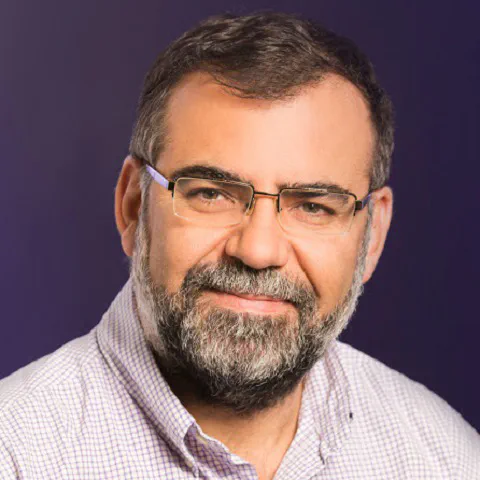
Keynote Speaker: Ricardo Baeza-Yates
Geographical Biases in Large Language Models
Brief Biography
Ricardo Baeza-Yates is a part-time professor at KTH Royal Institute of Technology in Sweden, and also holds part-time positions at Universitat Pompeu Fabra in Barcelona and at the University of Chile in Santiago. He is additionally affiliated with Chalmers University of Technology, the University of Gothenburg, and the University of Waterloo, and is a visiting professor at Northeastern University’s Silicon Valley campus. He was previously Director of Research at the Institute for Experiential AI at Northeastern University (2021-2025), Vice President of Research at Yahoo Labs (2006-2016), and CTO of NTENT (2016-2020). He is co-author of the best-selling textbook Modern Information Retrieval (Addison-Wesley, 1999; 2nd ed., 2011), winner of the ASIST 2012 Book of the Year Award. Ricardo Baeza-Yates is one of the leading global experts in Responsible AI, with significant contributions to web search, data mining, information retrieval, and algorithmic bias. He is an ACM Fellow and IEEE Fellow, and a member of several international academies, including Academia Europaea and the Chilean Academy of Engineering. He earned his Ph.D. in Computer Science from the University of Waterloo in 1989.
Abstract
Recent advancements in Large Language Models (LLMs) have made them a popular information-seeking tool among end users. However, the statistical training methods for LLMs have raised concerns about their representation of under-represented topics, potentially leading to biases that could influence real-world decisions and opportunities. These biases could have significant economic, social, and cultural impacts as LLMs become more prevalent, whether through direct interactions—such as when users engage with chatbots or automated assistants—or through their integration into assessment, representation, and dissemination of knowledge. One important case is geographical bias, that surfaces in recommendations for relocation, tourism, or new business. It also appears in cultural stereotypes and even representation of maps.
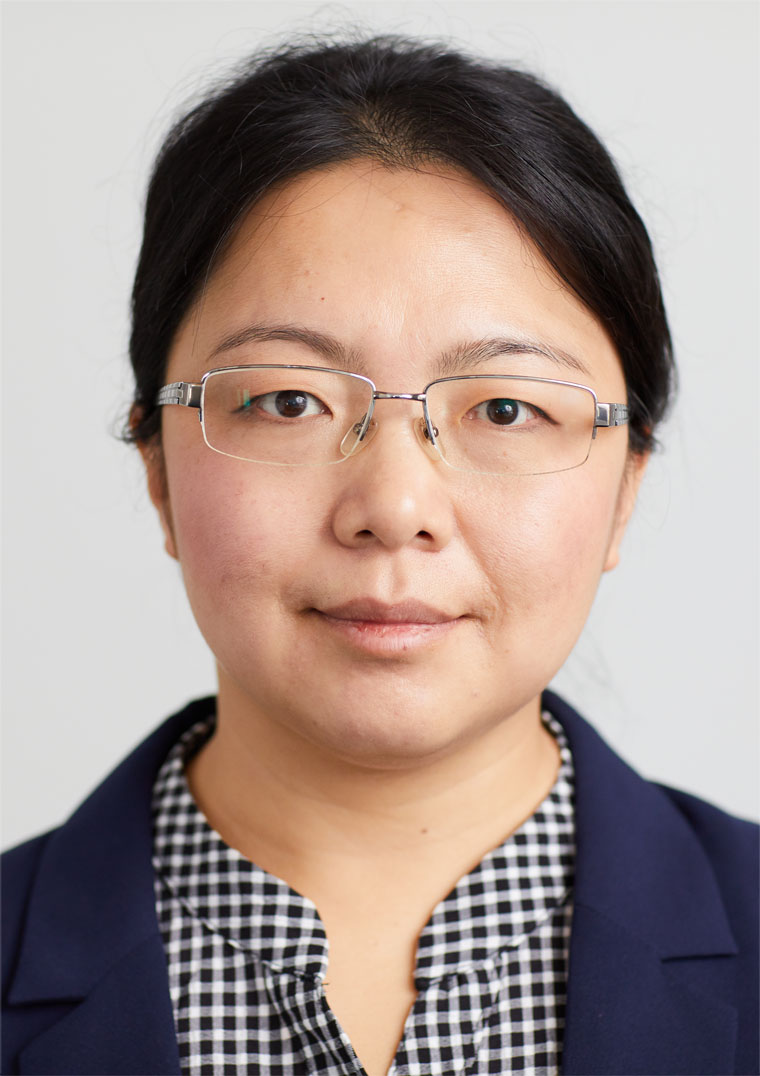
Keynote Speaker: Lina Yao
Towards Reliable Agentic Recommender Systems: Three Perspectives on a Vulnerable Pipeline
Brief Biography
Lina Yao is a Professor and ARC Future Fellow at UNSW (https://research.unsw.edu.au/people/professor-lina-yao). She strives to develop generalizable and explainable data-efficient data mining, machine learning, and deep learning algorithms—as well as designing systems and interfaces—to enable novel ways of human-AI interactions and cooperations, including an improved understanding of challenges such as robustness, trust, explainability, and resilience that improve human-autonomy partnership. Particularly, here research interest includes Few-Shot Learning, Zero-Shot Learning, Deep Reinforcement Learning, Meta-Learning, Neural Process, Self-supervised Learning, Graph Neural Networks and their applications in a broad range of applications in Recommender Systems, Computer Vision, Brain Computer Interface, Intelligent Transportation System, and Internet of Things. Here research is motivated by, and contributes to, various applications in Healthcare Informatics, Cyber Security, Transportation, Defence, Industry 4.0 and FinTech.
Abstract
LLM-based agents are transforming recommender systems with capabilities like autonomous exploration and self-evolution through memory augmentation, but their reliability remains underexplored. In this talk, I will introduce three perspectives stemming from our recent effort across the agentic recommendation pipeline. First, we frame implicit feedback as a counterfactual estimation problem with missing treatments, addressing positive-unlabeled and missing-not-at-random biases via causal sample stratification. Second, we introduce a black-box attack that exploits memory vulnerabilities in LLM-powered recommender agents, achieving two- to five-fold higher promotion rates while bypassing current defenses. Third, we present an approach that stabilizes offline policy learning using PDE-inspired Jacobian regularization and adaptive timestep sampling for flow-matching policies. Collectively, these efforts chart the vulnerability landscape—spanning feedback bias, memory security, and behavioral stability—and lay the groundwork for trustworthy agent-based recommendation.
| Time | Presentation | ||||
| 9:00 AM – 9:15 AM | Welcome Address | ||||
| 9:15 AM – 9:50 AM | Keynote by Ricardo Baeza-Yates | ||||
| 9:50 AM – 10:10 AM | SciTeller: An LLM-Based Framework for Persona-Adaptive Scientific Storytelling (Alex Argese, Andrea Sillano, Pasquale Lisena, Raphaël Troncy, Tommaso Calò, Luigi De Russis) |
||||
| 10:10 AM – 10:30 AM | Fair Agents: Balancing Multistakeholder Alignment in Multi-Agent Personalization Systems (Andrea Forster, Peter Müllner, Denis Helic, Elisabeth Lex, Dominik Kowald) | ||||
| 10:30 AM – 11:00 AM | Coffee break | ||||
| 11:00 AM – 11:35 AM | Keynote by Lina Yao (online) | ||||
| 11:35 AM – 11:45 AM | Toward Agentic Reconciliation: The Case for Multi-Stakeholder Negotiation in Tourism Recommender Systems (Ashmi Banerjee, Adithi Satish, Fitri Nur Aisyah, Wolfgang Wörndl, Yashar Deldjoo) | ||||
| 11:45 AM – 11:55 AM | A Participatory Governance Framework for Culturally Adaptive LLM Personalization: Advancing Digital Humanism Through Community-Driven Safeguards (Carine P. Mukamakuza, Ronald Kato) | ||||
| 11:55 AM – 12:10 PM | Sustainable Extractive Question Answering for Resource-Constrained Personalized Document Assistants (Sayali Nitin Doifode) | ||||
| 12:10 PM – 12:20 PM | Featured Input: Yashar Deldjoo | ||||
| 12:20 PM – 12:30 PM | Discussion and Wrap–up | ||||
Accepted Contributions
- Toward Agentic Reconciliation: The Case for Multi-Stakeholder Negotiation in Tourism Recommender Systems
Ashmi Banerjee, Adithi Satish, Fitri Nur Aisyah, Wolfgang Wörndl, Yashar Deldjoo - Fair Agents: Balancing Multistakeholder Alignment in Multi-Agent Personalization Systems
Andrea Forster, Peter Müllner, Denis Helic, Elisabeth Lex, Dominik Kowald - Sustainable Extractive Question Answering for Resource-Constrained Personalized Document Assistants
Sayali Nitin Doifode - SciTeller: An LLM-Based Framework for Persona-Adaptive Scientific Storytelling
Alex Argese, Andrea Sillano, Pasquale Lisena, Raphaël Troncy, Tommaso Calò, Luigi De Russis - A Participatory Governance Framework for Culturally Adaptive LLM Personalization: Advancing Digital Humanism Through Community-Driven Safeguards
Carine P. Mukamakuza, Ronald Kato